English
 Español

We designed this tray specifically for fish like salmon and tuna. It’s made from food‑grade PP material that’s safe for direct contact with seafood, a...

Home / News / Industry news / Sugarcane Bagasse in Food Packaging: A Practical Buyer's Guide to Fiber Tableware
Content
Sugar cane bagasse is the fibrous pulp left after sugarcane stalks are crushed for juice. Sugar mills generate it in large volumes, and for years it was mainly burned for energy or used as low-value feedstock. Today, a growing share is cleaned, pressed and molded into food-contact packaging such as bowls, plates, clamshells, cup lids and trays.
If you are evaluating bagasse for a menu, retail range or delivery operation, the useful question is not simply whether it is eco-friendly. It is whether a specific format can hold your food, survive your supply chain and support the food-contact and end-of-life claims you plan to make.
Bagasse is the dry, pulpy, fibrous residue left after sugarcane or sorghum stalks are crushed to extract juice. It is not the juice or the growing cane. Its main components are cellulose, hemicellulose and lignin, which allow it to be pulped and formed into molded fiber products.
"Sugarcane bagasse" and "sugar cane bagasse" refer to the same material. In food packaging it usually appears as molded tableware or as a fiber source for board. Final performance depends on fiber preparation, molding density, drying, barrier treatment and quality control, not just the material name.
| Property | What it means in practice |
|---|---|
| Origin | Fibrous residue from sugarcane juice extraction |
| Main components | Cellulose, hemicellulose and lignin |
| Common food-contact forms | Molded bowls, plates, clamshells, trays and lids |
| Heat and microwave use | Format-dependent; confirm the supplier's temperature and microwave guidance |
| Grease and water resistance | Often improved by a food-safe barrier; ask whether it is PFAS-free |
| End of life | Certified industrial compostability is possible; home compost is not guaranteed |
Food-grade bagasse packaging starts with collection and cleaning. Fiber is separated from pith and foreign material, mixed with water into pulp, formed on mesh molds under pressure, dewatered, dried and trimmed. Heat and pressure give the familiar smooth or ribbed surface of a bowl or clamshell.
The barrier step deserves attention. Some fiber packaging has historically used fluorinated treatments to resist grease. Many buyers now ask for PFAS-free barriers, but that claim should be supported by test reports. Ask what is coated, on which surface, and whether the coating affects compostability.
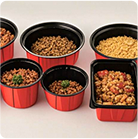
If you are comparing molded fiber with paperboard for a soup or noodle bowl, a lidded paper bowl is a useful benchmark for fit and lid performance. One of our food-grade paper bowl options is shown below.
 Food-Grade Lidded Paper Bowl OptionsA paper bowl format to compare lid fit and performance when weighing molded fiber against paperboard for soup or noodle bowls.View Product →
Bagasse molded fiber is rigid, opaque and pleasant to hold. It can be made with compartments and textured surfaces, and it handles dry or semi-dry foods well. For bakery items, snack boxes and some takeaway meals, it can feel more substantial than thin paperboard and less synthetic than plastic.
It is not automatically a universal replacement. Hot liquids, long delivery times, high stack loads and repeated moisture can expose weak wall thickness, lid fit or barrier quality. Test with the actual food, at the actual serving temperature, using the actual lid and case pack.
Many bagasse containers are used for warm food, but "microwave safe" is not a material-wide promise. It depends on coating, density, shape and time. Ask for a temperature range and microwave instruction for the exact item. Also check grease and moisture performance when the container is stacked, opened and closed, and carried in a delivery bag with condensation.
Bagasse has a strong story because it is a residue from sugar production. It does not require a dedicated crop harvest for packaging, and it turns a mill by-product into a useful material. That is a real advantage, but it is not zero impact. Collection, pulping, drying, molding, coating and transport all use energy and water, and bagasse also competes with fuel and other industrial uses.
Compostability needs the same care. A bagasse container may be certified for industrial composting, but that does not mean it will break down in a home garden or landfill. Local collection, food contamination and coatings all matter. If compostability is part of your customer promise, verify the certification, test standard and local waste stream. You can read more about our sustainable packaging approach for context on how material choices fit together.
The right material depends on the job. Bagasse is often a strong fit for opaque molded tableware, while clear plastics still win where product visibility is essential. The table below is a practical starting point, not a final specification.
| Material | Typical uses | Strengths | Watch-outs |
|---|---|---|---|
| Bagasse molded fiber | Bowls, plates, clamshells, trays | Rigid, opaque, made from a residue, compostable when certified | Barrier and microwave performance vary; not transparent |
| Paperboard | Bowls, cups, boxes, sleeves | Printable, lightweight, familiar to customers | Usually needs a lining for liquids and grease |
| PP | Lunch boxes, cups, trays, soup bowls | Heat resistance, toughness, microwave options | Fossil-based unless recycled or bio-based; check food-contact grade |
| PET | Cold cups, salad bowls, bakery boxes | Clarity, strength, good shelf presentation | Not ideal for high-heat applications |
| PLA | Cold cups, containers, some trays | Plant-based, compostable in industrial settings | Heat limits; composting access required |
For curries, noodles, rice bowls and salads, look for a bagasse bowl with a secure lid, tested grease barrier and suitable wall thickness. If delivery routes are long or the food is saucy, test the package after 30 to 45 minutes in a warm bag. A paper bowl with a lid can also be a practical comparator for fiber-based takeaway.
Bagasse works for opaque plates and some clamshells, but it cannot show product the way clear plastic can. For cakes, tarts and sandwiches that need shelf visibility, a clear PET container is often better. Our 5-compartment PET bakery container is one format that keeps items separate while showing them clearly.
Clear 5-Compartment PET Bakery ContainerA clear PET container with five compartments that keeps bakery items separate while remaining visible for shelf display.View Product →
Molded fiber trays can suit produce and some fresh items, but high-moisture proteins, vacuum skin packs and modified atmosphere packaging usually need a material and seal engineered for the job. If you pack salmon, meat or prepared meals, compare fiber with PP trays designed for cold-chain performance and sealing.
Bagasse is a natural fiber, so consistency matters. A good supplier should explain fiber sourcing, molding tolerances, coating type and batch testing. Before a production run, ask for:
Also ask how the supplier handles color, print, embossing and dimensional tolerance. Natural fiber can vary slightly from batch to batch, which matters more for premium retail packaging than for a simple takeaway bowl.
Sugar cane bagasse is a useful food packaging material with a credible sustainability story, but it is not a magic switch. It performs best when the format, barrier and lid are matched to the food, serving temperature and available end-of-life system. Use it where its rigidity and residue-based story add value, and use clear or heat-resistant plastics where those properties matter more.
At Liangwang, we work with food-grade PP, PET, PLA and paper formats for takeaway, bakery, fresh food and retail packaging. If bagasse is on your shortlist, we can help you compare it with the formats we produce. Talk to our team with your menu, filling weight and delivery conditions, and we will help narrow the options.
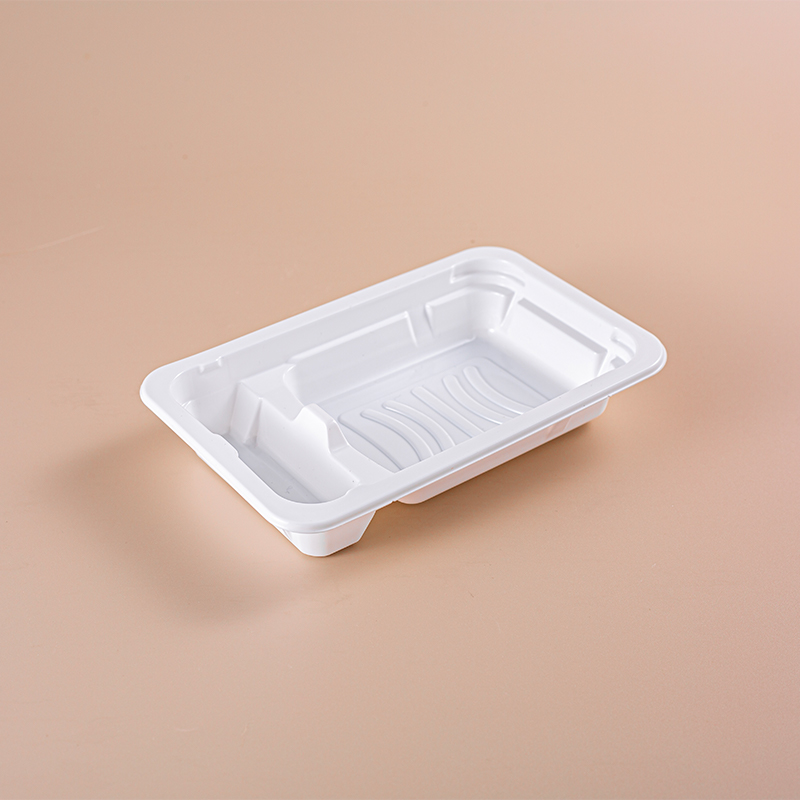
We designed this tray specifically for fish like salmon and tuna. It’s made from food‑grade PP material that’s safe for direct contact with seafood, a...
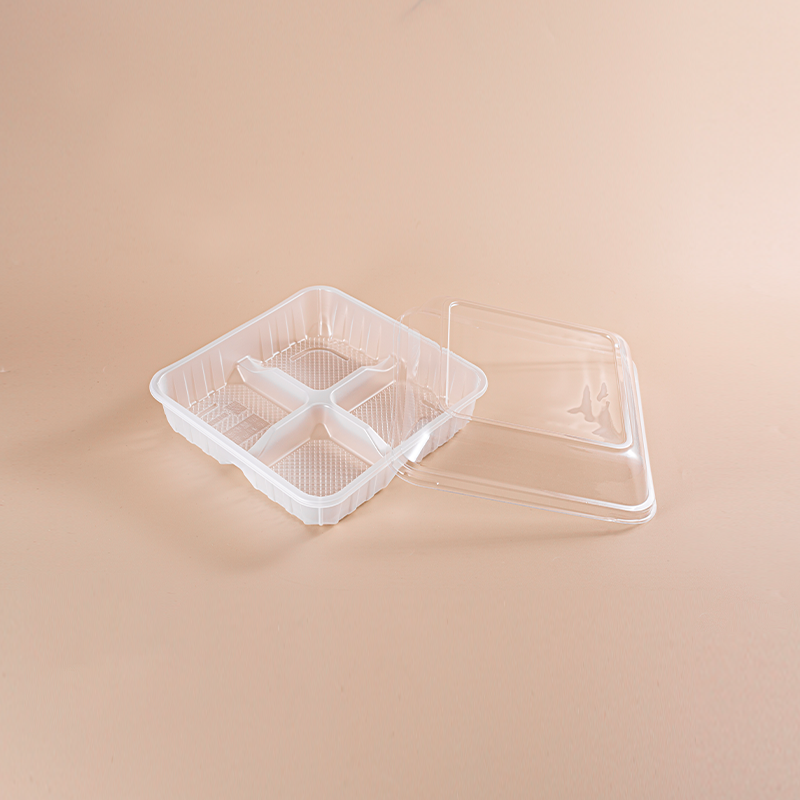
This 4-compartment dessert packaging box is specially designed for small-sized pastries and mini desserts. Compared with standard egg tart trays, each...
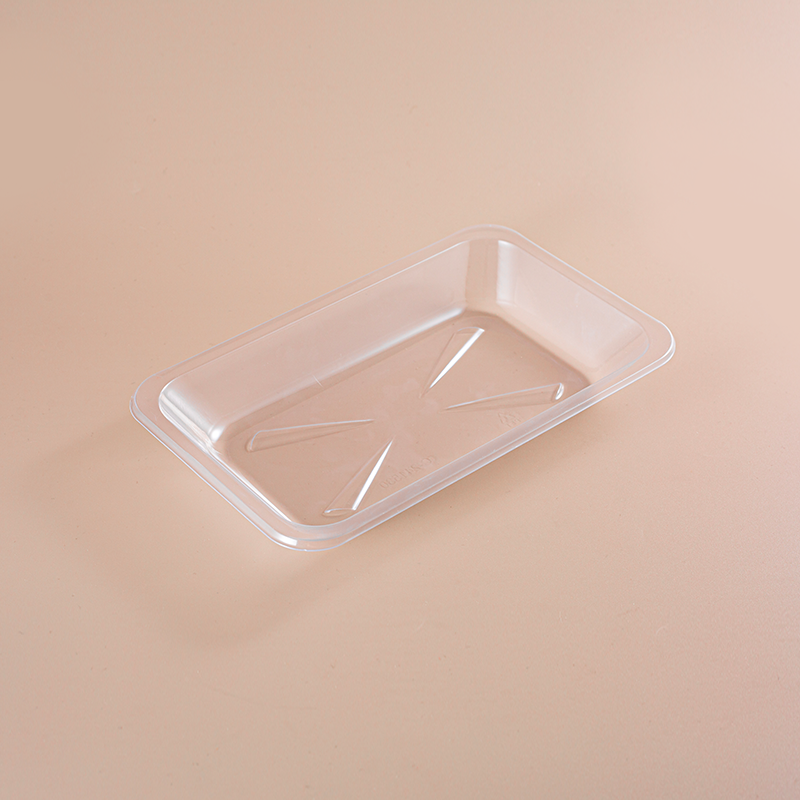
This integrated large-capacity PP tray is designed with a stable and durable structure, offering versatile functionality for a wide range of food pack...
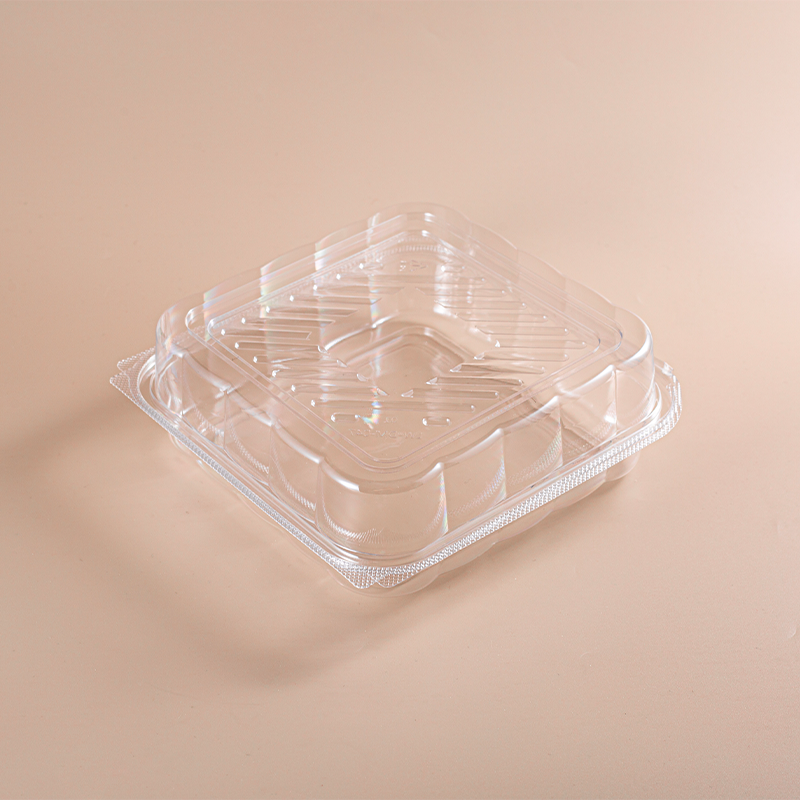
Our square baking box is designed to provide a reliable and attractive packaging solution for a wide range of baked goods. Made from premium food-grad...
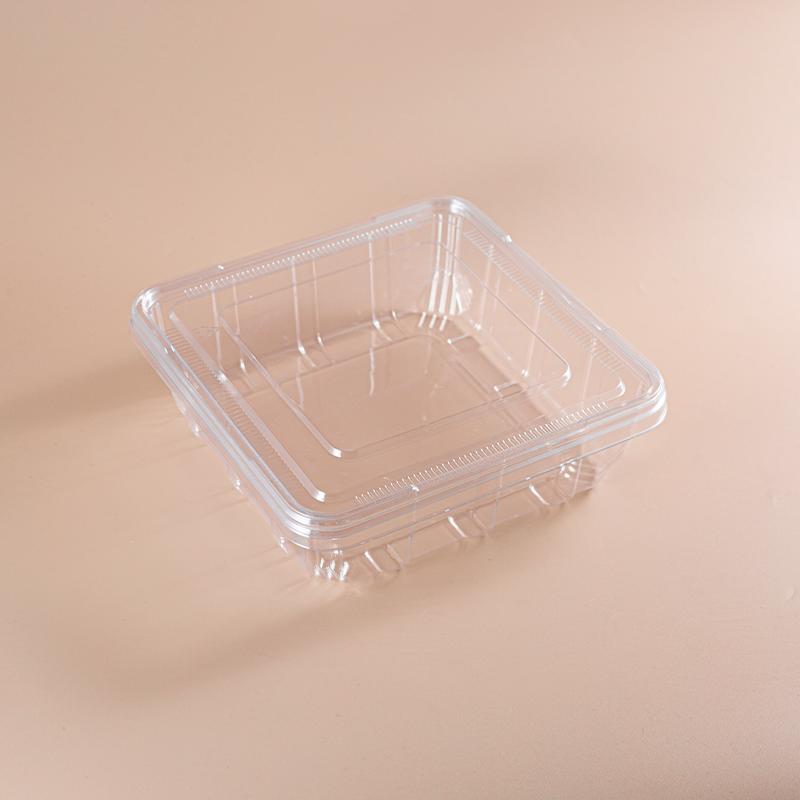
Our baking boxes are made from premium food-grade PET material, providing an eco-friendly, disposable packaging solution that combines functionality w...
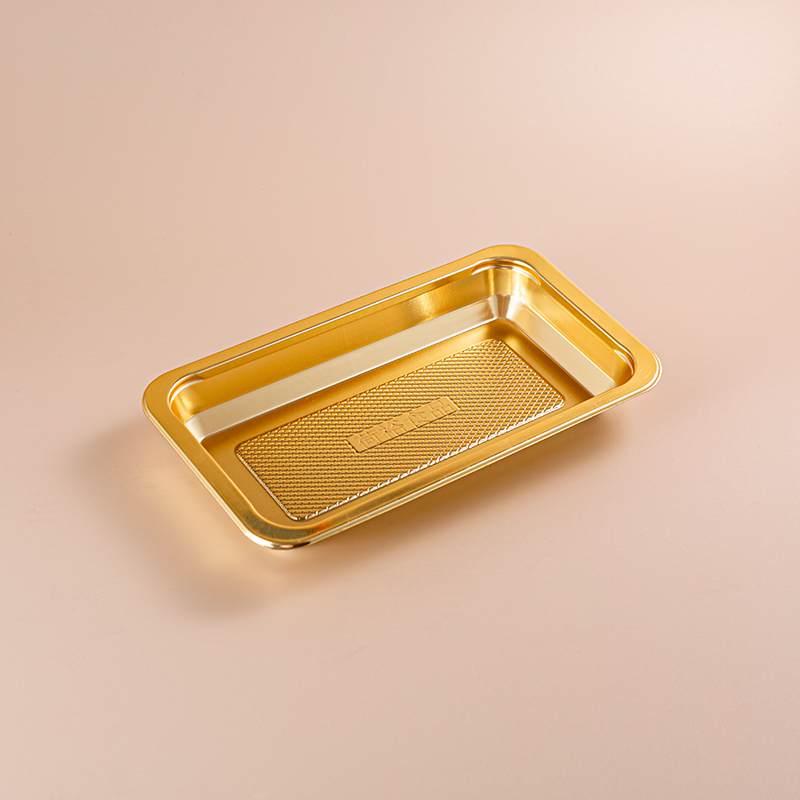
PP rectangular food trays are a practical packaging solution for supermarkets, restaurants, and fresh food stores looking to protect perishable produc...

This transparent PET plastic packaging box is designed with a simple and elegant appearance, combining practicality with visual appeal. Made from high...
Disposable Food Containers Evolve to Meet the Needs of Modern Takeaway and Catering The rapid development of takeaway services, food delivery and conv...
If you have sourced for a medical device programme before, you will have noticed that "die cut medical materials" describes two things at once. Somet...
Few small pleasures beat turning last night's takeout into today's lunch, and few small frustrations beat standing in front of the microwave, contain...
Against the global backdrop of low-carbon transformation and circular economy development, the green and environmental-friendly upgrade of the food p...
Eco-Friendly Food Packaging Gains Momentum as Food Industry Embraces Sustainable Solutions As food delivery, takeaway services, fresh retail and conve...