English
 Español

This transparent PET plastic packaging box is designed with a simple and elegant appearance, combining practicality with visual appeal. Made from high...

Home / News / Industry news / Can You Microwave a Cardboard To-Go Box? Safe Reheating Rules That Actually Work
Content
Few questions reach us as often as this one, and it almost always arrives with a half-eaten lunch already turning in the microwave. Cardboard to-go boxes have quietly become the default vessel for grain bowls, burritos, sandwiches, pastries and leftovers, so whether you can reheat in them has turned into a practical everyday problem rather than a technical one.
The honest answer sits somewhere between "yes, quickly" and "please look before you press start." Plain cardboard on its own tolerates short bursts of microwave energy reasonably well. What complicates matters is everything attached to that box: the coating, the lining, the glue at the seams, the printed film on the lid, and occasionally a metal handle nobody noticed.
Plain, uncoated cardboard can generally go into a microwave for short periods, provided there is food inside it and you stay in the kitchen. The box works as a container, not as a cooking vessel. Heat transfers from the food into the board, the board warms, and as long as it stays below the temperature where paper begins to scorch, nothing dramatic happens.
The conditions are simple. Reheat in bursts of thirty to sixty seconds rather than one long blast. Never run the microwave with an empty box inside, because a dry paperboard container with nothing to absorb the energy has exactly one direction to go. And if the box carries no microwave marking at all, treat it as unproven rather than safe, especially when the food is oily, saucy or fatty.
This is the one absolute rule. Foil-lined lids, metallized films, wire handles, staples and even decorative printing that uses metallic ink can arc inside a microwave. Small sparks are not a cosmetic problem; they pitting the cavity wall and can damage the magnetron over time. If any part of the packaging reflects light like a mirror and bends like foil, the whole container stays out.
Most takeout boxes are lined with a thin film of polyethylene, PLA or a dispersion barrier so sauces do not bleed through the board. Many of these linings are formulated to handle reheating, but they soften as they warm, which can make a lid warp or a seam separate. A box that was snug when you closed it may look tired after ninety seconds, and that is a sign to slow down rather than keep going.
Printing ink on the outside of a box is rarely a direct food contact concern, but it can transfer to your hands when the board gets hot and steamy. Glued seams can release if the container overheats. Neither is likely to ruin your meal, but both are reasons to transfer food to a plate when you have the option.
Oil heats far faster than water, and a pooled patch of sauce in one corner of a box will create a local hot spot long before the rest of the food is warm. That is why fried food and greasy leftovers deserve shorter intervals and more stirring. Moisture, on the other hand, keeps the board from drying out, which is why a box with food in it behaves so differently from an empty one.
Before you peel back the lid, glance at the base or the side wall. Manufacturers who intend their packaging for reheating usually say so plainly. Look for a small microwave icon with wavy lines, the words "microwave safe," or a resin code that tells you what the material actually is.
| Material | Microwave verdict | What to watch for |
|---|---|---|
| Plain uncoated cardboard | Usually fine, 30 to 60 seconds at a time | Scorching if the board dries out |
| Coated or film-lined board | Fine when labeled microwave safe | Lid warping, film softening, seam separation |
| Foil-laminated or metallized board | No | Arcing, sparks, appliance damage |
| Molded fiber and bagasse | Generally yes | Dries out quickly and can scorch at the edges |
| PP plastic, resin code 5 | Yes | Warping under very fatty or sugary foods |
| PET plastic, resin code 1 | No | Softens and distorts well below food temperature |
| Board with metal handles or rivets | No | Metal always overrules the cardboard |
Once you know the box is plain cardboard or a labeled microwave-safe lined board, the rest is technique rather than guesswork.
If you want extra insurance, rest the cardboard box on a microwave-safe plate. It catches any leakage, keeps the base from direct contact with a hot turntable, and makes the whole container easier to lift out.
Some situations do not reward caution; they simply call for a plate.
None of these are unusual. A quick transfer costs ten seconds and removes the entire question.
Many restaurants pair a cardboard outer sleeve with a rigid plastic base, and the base is often the part people actually reheat. Here the resin code matters more than the cardboard ever will. Polypropylene, marked with a 5, is the material most takeout kitchens reach for precisely because it holds up to reheating without deforming. PET, usually marked with a 1, is chosen for its clarity in cold applications such as salad bowls and dessert cups, and it has no business in a microwave.
 Eco-Friendly Food Containers and PP CupsJiangsu Liangwang's range covers food containers, PP/PET/PLA cups, baking packaging and fresh trays, offering material and format options for takeout specifications.View Product →
For operators, this is a design decision rather than an afterthought. Pairing a microwave-ready PP base with a printed cardboard sleeve gives customers a container they can safely reheat and a surface that still carries the brand, and it avoids the awkward situation where the lid is fine but the base is not.
If you are choosing packaging rather than merely living with it, the question shifts from "can I microwave this" to "will my customer assume they can." Anyone who orders a hot dish will eventually reheat it, and the packaging should either make that easy or make it obviously unsafe.
Plain board with a clearly printed microwave instruction is the simplest solution. Where the food is wet or saucy, a coated board or a fiber bowl with a matching lid usually performs better, because the board stays supported while the contents are hot. For rice bowls, curries and soup-based dishes, the fit of the lid matters as much as the material, since a loose lid lets steam escape and the board to dry out.
American-Style Lunch Boxes and Compartmented ContainersJiangsu Liangwang's eco-friendly food container range includes American-style lunch boxes and compartmented formats for multi-component meals, with customization and ODM/OEM services.View Product →
For lunch plates and multi-component meals, compartmented bases reduce the amount of oil pooling in one corner, which is exactly the condition that makes cardboard scorch. You can see the logic laid out across our own range of American-style lunch box packaging and compartmented containers, where the base is sized so a single sauce-heavy portion does not sit against one wall of the box.
Custom ODM/OEM Food Packaging ProgramsJiangsu Liangwang provides design, mold making, sampling and ODM/OEM services across cups, containers, baking packaging and trays to support tailored packaging specifications.View Product →
Most of the brands we work with end up combining two or three formats rather than standardizing on one. The practical route is to decide which dishes are likely to be reheated, then confirm the material, the lining and the labeling all point the same way. Our team handles that kind of specification work regularly through custom ODM and OEM packaging programs, and the questions are always the same: what temperature, how long, and does the customer know what to do.
If you want a broader refresher on reheating rules across container types, our guide to safe reheating rules for takeout containers covers the same ground from the operator's side, including how labeling choices affect what customers actually do at home.
To bring it back to the box on your counter: plain cardboard is usually fine for a short reheat, as long as the food is inside, the lid is open, metal is nowhere in sight, and you are paying attention. Everything beyond that is a detail of coating, lining and common sense. When in doubt, the plate is always the safer answer, and no one has ever regretted decanting a lunch before warming it up.

This transparent PET plastic packaging box is designed with a simple and elegant appearance, combining practicality with visual appeal. Made from high...
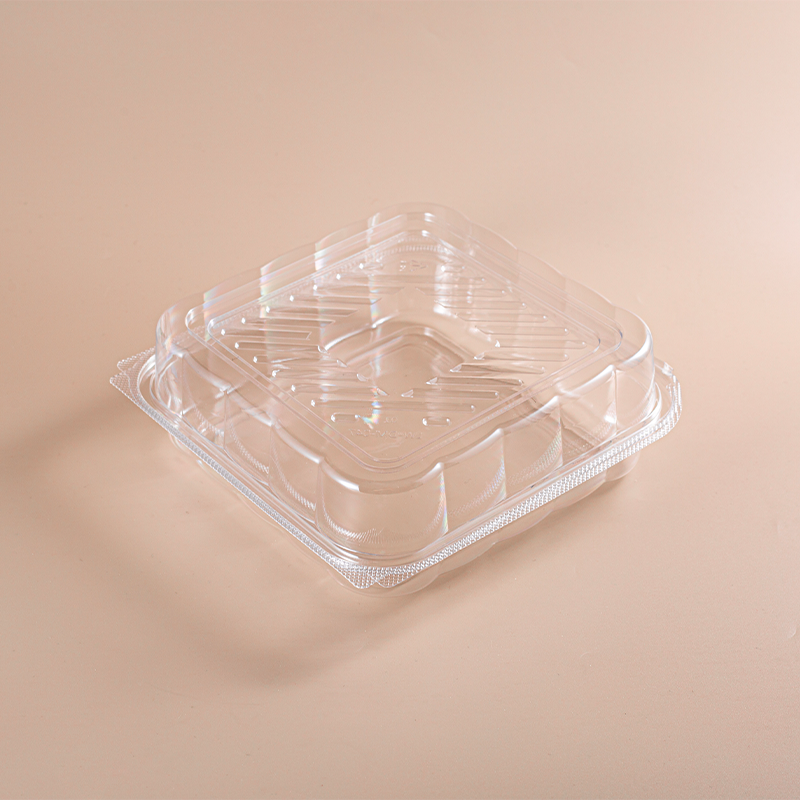
Our square baking box is designed to provide a reliable and attractive packaging solution for a wide range of baked goods. Made from premium food-grad...

This disposable clamshell plastic packaging box is designed with enhanced thickness and durability, making it a reliable solution for bakery and food ...
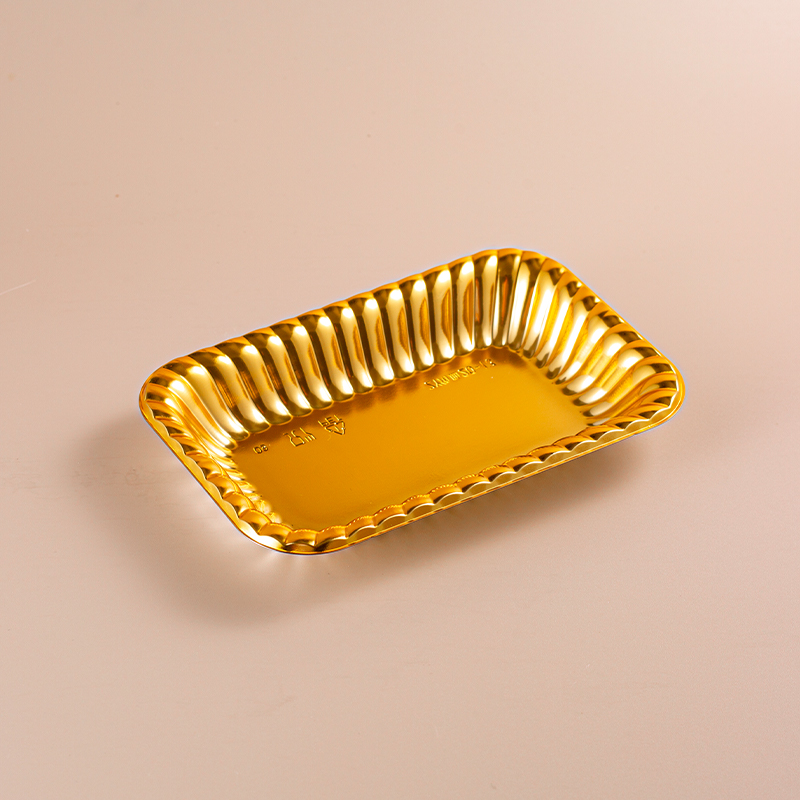
Crafted from high-quality, food-grade polypropylene (PP), our Orange Food Plastic Tray combines vibrant aesthetics with uncompromising safety and dura...

This transparent clamshell PET packaging box is designed with a clean, modern appearance and strong practical functionality, making it an ideal soluti...

This high-quality disposable clamshell plastic food packaging box is designed to provide a convenient and practical solution for food storage, display...

This disposable PET plastic box is designed to provide a practical and attractive packaging solution for modern food storage, display, and takeaway ap...
Deli containers are the quiet workhorses of takeout food. The quart of wonton soup, the pint of chili, the potato salad from the supermarket counter,...
With the rapid development of the takeout and catering industry, high-quality disposable lunch boxes have become an essential packaging product in mo...
Few objects move through a restaurant faster than a takeout container. It is filled at the pass, stacked into a bag, carried across town, and then — ...
Few small pleasures beat turning last night's takeout into today's lunch, and few small frustrations beat standing in front of the microwave, contain...
As a professional manufacturer of disposable lunch boxes, Jiangsu Liangwang Technology relies on strong R&D strength and modern intelligent manuf...