English
 Español

This rectangular plastic sandwich box is made from high-quality food-grade PET material, ensuring excellent food safety, freshness, and reliable perfo...

Home / News / Industry news / Microwave Safe Takeout Containers: PP, CPET, PET, PLA, Foam and Paper Compared
Content
Few objects move through a restaurant faster than a takeout container. It is filled at the pass, stacked into a bag, carried across town, and then — nine times out of ten — slid into a microwave with the lid still half attached. That last step is where most complaints begin, and it is exactly where the phrase "microwave safe takeout containers" earns its keep.
We have spent years forming food-grade packaging, so the questions we hear are always similar: which boxes can take the heat, why do some warp after ninety seconds, and what happens when a container is simply not up to the job. Here is what we have learned, in plain language.
The label sounds absolute, but it is really shorthand for three conditions that have to hold at the same time.
Two related points are worth separating. "Microwave safe" does not mean "oven safe" — a box rated for a microwave will often fail badly in a 200°C oven. And a container can be perfectly safe yet reheat poorly, if steam has nowhere to go and the food turns rubbery. Safety and performance are different tests, and good packaging passes both.
Most containers carry a small triangle with a number inside. That code identifies the polymer family, and in a busy kitchen it is the quickest check you can make before food goes in.
| Material | Resin code | Behaviour under heat | Microwave guidance |
|---|---|---|---|
| Polypropylene (PP) | 5 | Stable through normal reheating, roughly 100–120°C | Yes, the usual default |
| Mineral-filled PP (MFPP) | 5 | Stiffer walls, less warping under heavy portions | Yes |
| Crystallised PET (CPET) | 1 | Dual-ovenable, handles temperatures well above boiling | Yes |
| Standard PET | 1 | Softens around 70–80°C | No |
| PLA (plant-based) | 7 | Softens near 55–60°C | No, unless explicitly rated |
| Polystyrene foam | 6 | Melts, collapses, can leave residue | No |
| Coated paper | — | Depends entirely on the lining | Only if labelled |
| Aluminium foil | — | Arcs and sparks in most microwaves | No |
Codes describe the family, not the grade. Two number 5 containers can behave very differently depending on wall thickness, filler content and how the tooling distributed the material. That is why a supplier's data sheet still matters more than the stamp on the base.
Walk along any takeout counter and most of the genuinely microwave-friendly boxes you see are polypropylene. It is not a glamorous material, but it does three things well: it holds its shape, it is light, and it seals cleanly against a lid. Homopolymer grades give the stiffness, copolymer grades add impact strength for cold-chain handling, and mineral-filled versions trade a little gloss for extra rigidity — which is why they turn up in large rice and pasta trays.
The practical ceiling matters too. PP sits comfortably inside the range a microwave actually produces during a few minutes of reheating, so a well-designed box rarely deforms unless the food is dry, oily or heavy on sugar — the three conditions that push surface temperatures well past what water alone would create.
Our own range is built around that behaviour. For single portions of rice, curry or stir-fry, the square profile gives a flat base that sits still on the turntable and stacks neatly in a delivery bag afterwards.
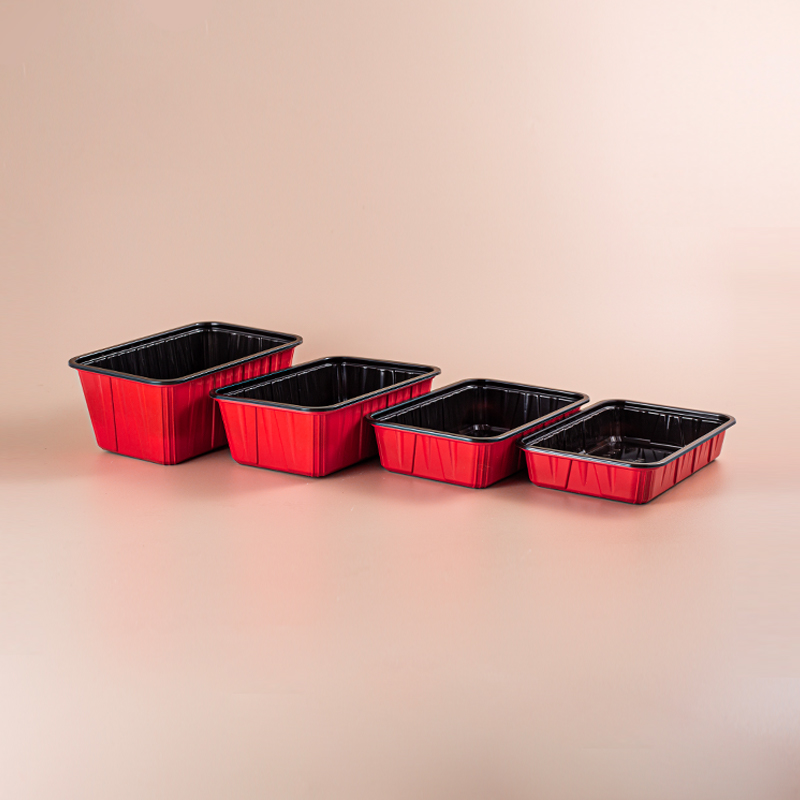 Microwavable Square PP Food Box with Sealing LidMicrowave-safe square food-grade PP box for single portions, with flat base, snap-locking lid, and 380–1000ml capacities.View Product →
Material gets the headlines, but most reheating failures we investigate come back to geometry. A handful of details do the heavy lifting:
Round profiles are naturally better for liquids, because heat circulates instead of pooling in corners. That is the reasoning behind our PP soup bowl, which is moulded with a reinforced rim so the wall does not bow when the contents are hot.
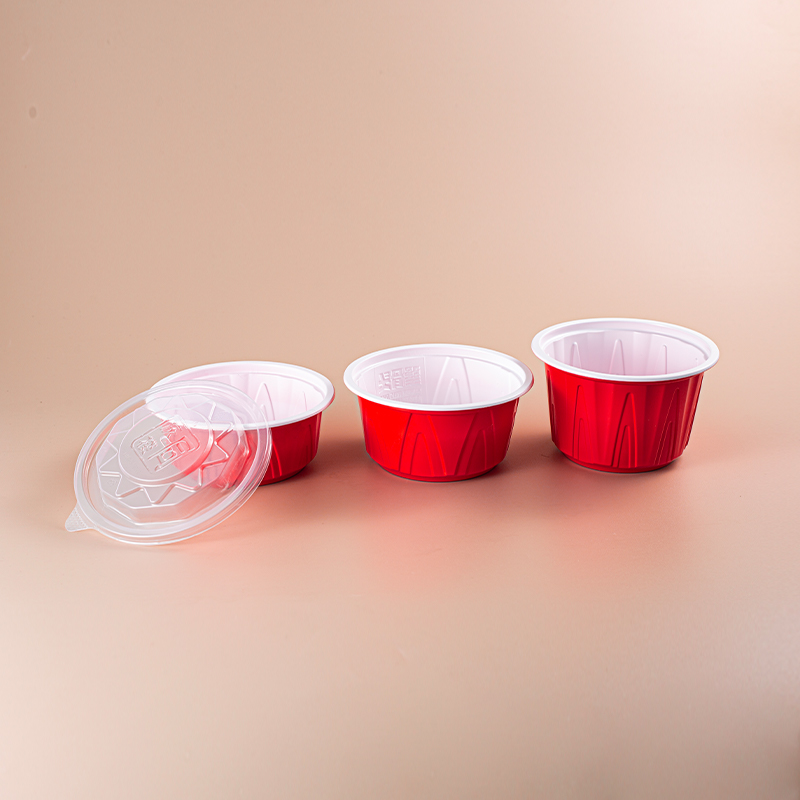 Round PP Soup Bowl with Reinforced RimRound food-grade PP bowl for hot soups and oily dishes, with reinforced rim, stackable design, and 300–1750ml capacities for delivery.View Product →
Whatever the container, a few habits prevent most accidents. These are the rules we pass on to the kitchens we supply:
We cover the temperature side of this in more detail in our guide to safe reheating rules for takeout, which is worth a read if your team handles a high volume of deliveries.
Combo meals need one extra thought. When rice, a main and a side share a single box, flavours and moisture migrate, so compartmented trays that keep components apart — and reheat evenly because each well holds a similar volume — tend to produce a better second meal than one large cavity.
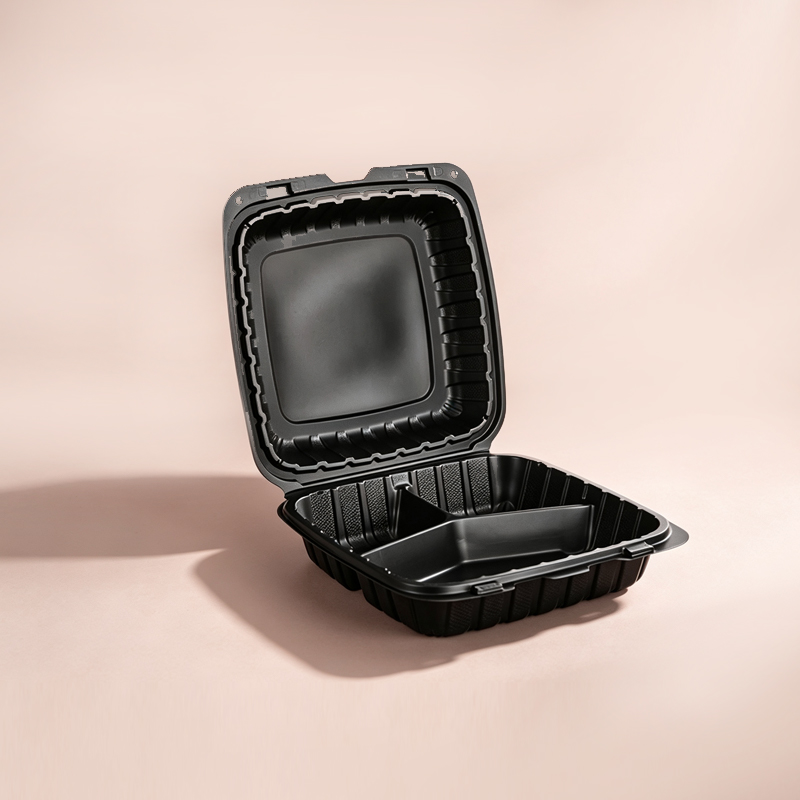 One-Piece Hinged PP Takeaway Lunch BoxHinged food-grade MFPP lunch box with integrated lid and wider buckle seal, available in 6×6, 8×8, 9×9, and 9×6×3 inch sizes.View Product →
If reheating performance matters to your menu, a short conversation will save a long complaint later. We suggest asking:
These are fair questions, and a serious manufacturer will welcome them. Ours are answered in a Class 100,000 GMP workshop with an in-house laboratory, thermoforming lines from German equipment, and management systems covering quality, food safety and environmental performance. You can read more about our factory and certifications if you would like the detail.
We would not. Standard PET starts to distort around 70–80°C, which a small portion can reach in under a minute. Cold cups and salad bowls made from PET are designed for display, not heat.
The colour itself is not the problem — food-grade pigments are routine. The risk lies in containers made from unidentified recyclate, where the input material cannot be traced. Ask for the grade, not the shade.
Single-use containers are engineered for one reheating cycle. A second pass stresses seams and rims that have already been softened once, and the odds of a leak climb sharply.
Matching a container to a menu is not complicated, but it is specific. A soup kitchen and a salad bar need different answers, and the box that survives a ninety-second reheat of braised pork will not necessarily suit a dry pastry. If you are weighing up materials for a new line, tell us what you are serving and how it will be reheated, and we will point you to the format that fits rather than the one that simply looks good on a shelf.
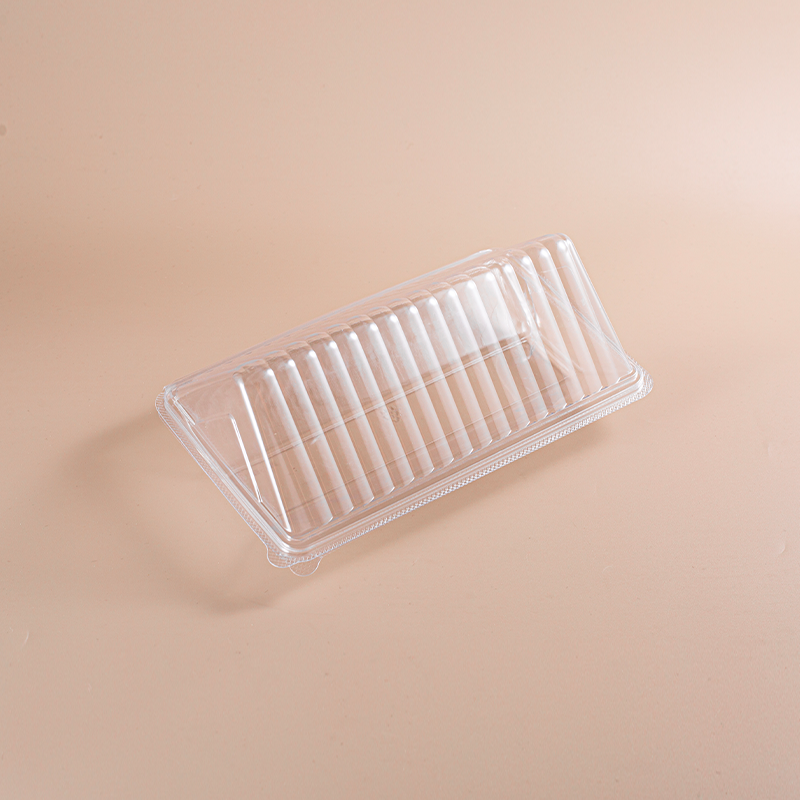
This rectangular plastic sandwich box is made from high-quality food-grade PET material, ensuring excellent food safety, freshness, and reliable perfo...
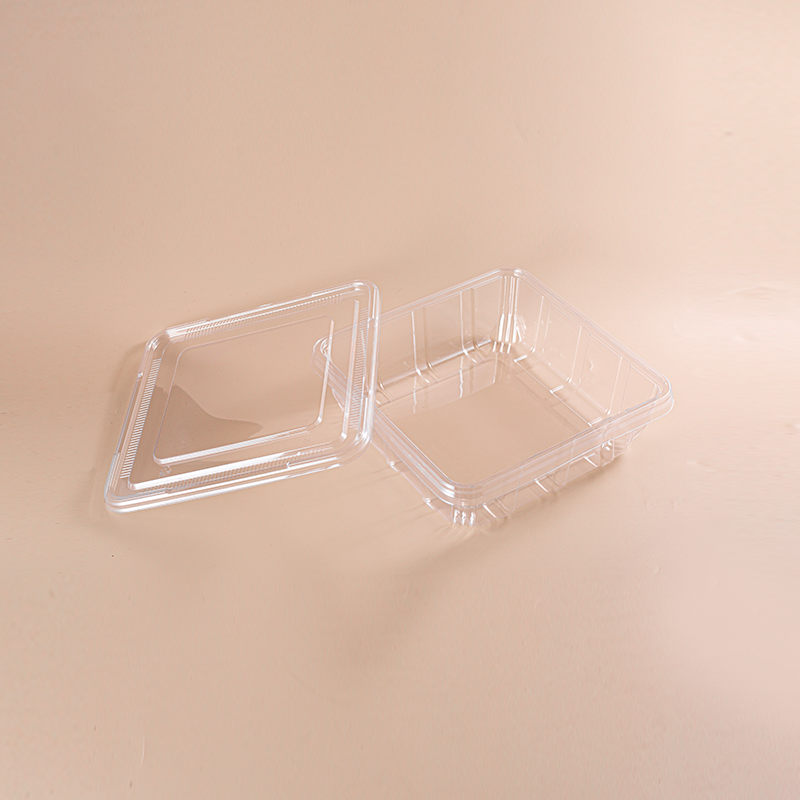
This square PET transparent food packaging box is designed with an increased height structure, making it especially suitable for packaging taller bake...

As a responsible manufacturer in the eco-friendly packaging industry, Liangwang Company is committed to the concept of green and energy-saving product...
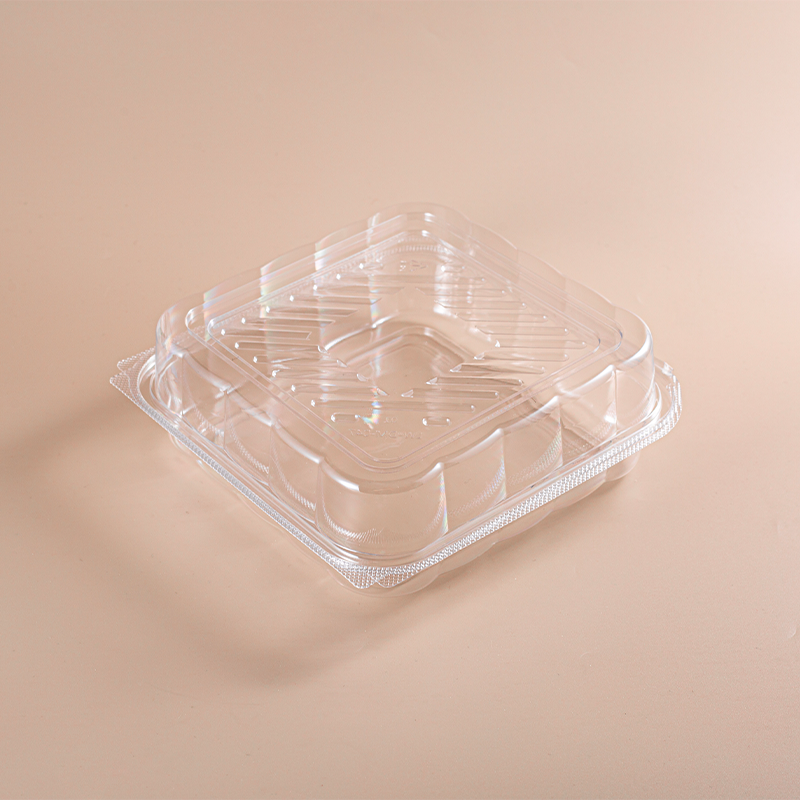
Our square baking box is designed to provide a reliable and attractive packaging solution for a wide range of baked goods. Made from premium food-grad...

This large-capacity baking food packaging box is designed with a 5-compartment independent structure, providing an efficient and organized solution fo...

This high-quality disposable clamshell plastic food packaging box is designed to provide a convenient and practical solution for food storage, display...
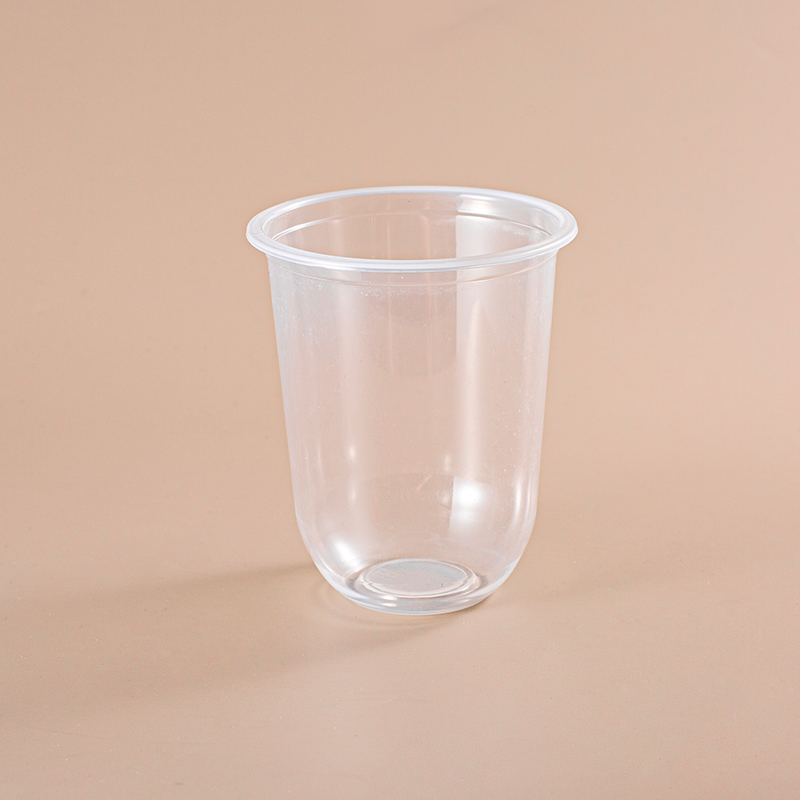
U-shaped plastic cups are ideal for serving a variety of beverages, including bubble tea, juice, smoothies, cocktails, mocktails, etc. These transpare...
Deli containers are the quiet workhorses of takeout food. The quart of wonton soup, the pint of chili, the potato salad from the supermarket counter,...
With the rapid development of the takeout and catering industry, high-quality disposable lunch boxes have become an essential packaging product in mo...
Disposable Food Containers Evolve to Meet the Needs of Modern Takeaway and Catering The rapid development of takeaway services, food delivery and conv...
Ask a room full of cafe owners whether they prefer a styrofoam cup or a paper cup, and you will usually get a confident answer before anyone has pour...
Fresh Food Packaging Develops to Improve Protection, Presentation and Shelf Life Fresh food products require packaging that can provide protection thr...